About
VELA
An independent charitable trust running a working observatory and a public sky centre on Hallow Fell, in west Cumbria.
How it got here
The site began in 1963 as an outstation, chosen for the least light-polluted ground within reach of a university that had run out of usable sky at home. For thirty-five years it was three huts and a transit instrument, and the public were not invited.
The university withdrew in 1996. Rather than let the site close, the staff and a group of local members set up the trust that still runs it, and opened to visitors in 1998 — on the argument that a dark sky nobody is allowed to look at is not really being protected by anyone.
The planetarium was added in 2004, the 1.2 metre replaced the original 0.6 in 2019, and the 1908 Cooke refractor was restored the same year.
How it is run
VELA is an independent charitable trust with nine trustees, four of them elected by the membership. It takes no regular public funding: admissions cover the building, membership and donations cover the science and the schools programme.
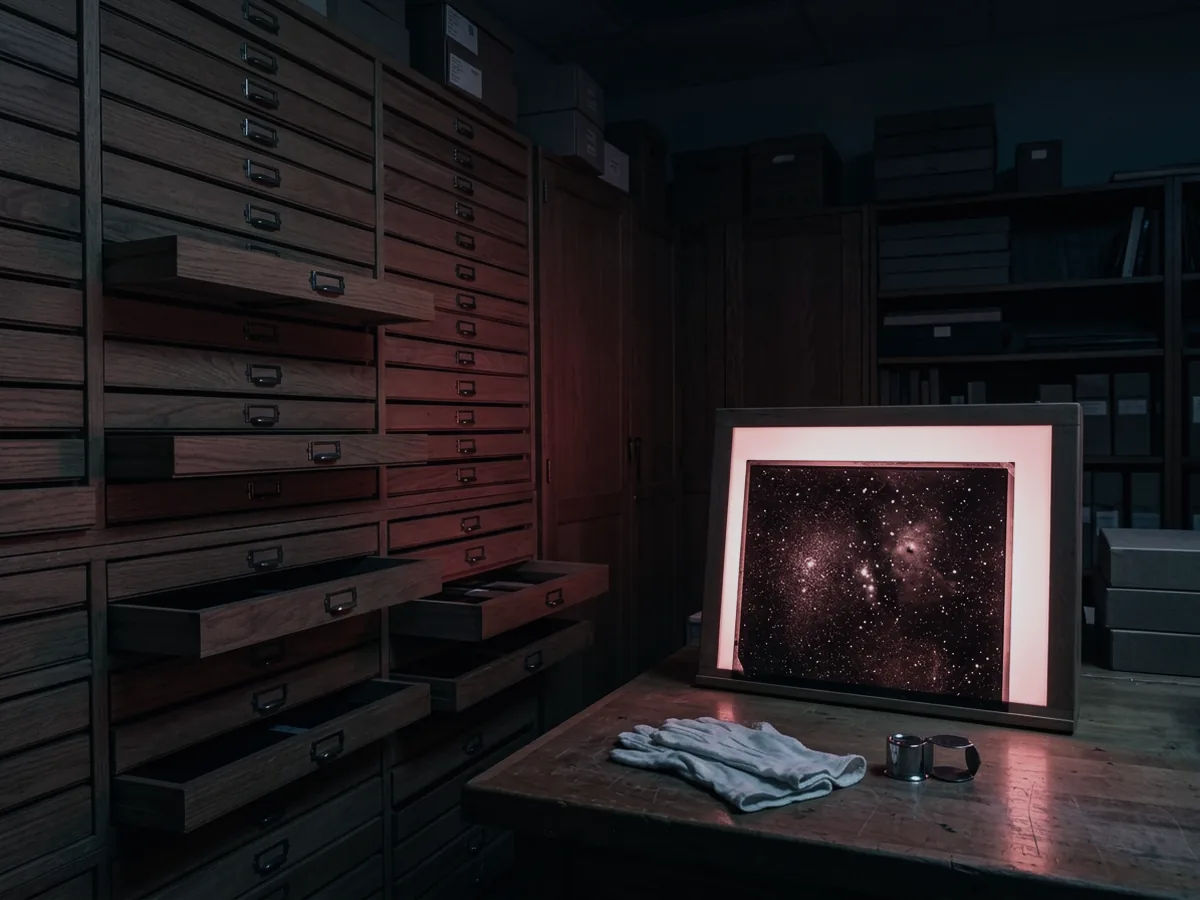
Fourteen people work here, six of them part-time, plus about forty volunteers who do everything from plate digitisation to standing on a cold terrace explaining what a globular cluster is for the ninetieth time.
What we do about the light
Protecting a dark sky is mostly unglamorous committee work, and it is the single most useful thing this observatory does.
Every external light on this site is shielded, below 2700 K, on a timer, and aimed downward. The car park lighting goes off entirely on telescope nights. We measure our own contribution to sky glow and publish it with everything else.
Beyond the boundary we work with the neighbouring parishes on street lighting replacement. Three have now converted to shielded warm fittings, which is worth more to the sky above this fell than any instrument we could buy.
If you are a parish council, a landowner or a business within about twenty kilometres and you are replacing lighting, talk to us first. We will survey it, model the effect and write the specification, free.
Access statement
Written plainly, and kept honest about what is not accessible as well as what is.
Step-free
The entrance, shop, Meridian Room, all four galleries, the planetarium and the observing terrace are step-free throughout, with a level route from the accessible parking bays. Accessible toilets by the entrance and by the dome.
Not step-free
The 1908 refractor is reached by fourteen stairs with a handrail and there is no lift. The dome is a listed timber structure and there is nowhere to install one. A live feed from its eyepiece runs on a screen in the Measuring Room during every public session.
Wheelchairs and seating
Six wheelchair spaces in the planetarium, bookable with any show. Two manual wheelchairs to borrow, free. Seating every thirty metres or so throughout, and folding stools to take onto the terrace.
Deaf and hard of hearing
Hearing loop in the planetarium, the Ransome Room and at the ticket desk. Every dome show is captioned. BSL-interpreted shows run on the first Sunday of the month at 13:00, and we will arrange an interpreter for any session with two weeks’ notice.
Blind and partially sighted
Audio description for all four galleries. A handling collection of instrument replicas and three-dimensional prints of the Moon, Saturn and a spiral galaxy that are genuinely worth touching. Assistance dogs welcome everywhere including the terrace.
Relaxed and sensory
Relaxed dome shows on the second Saturday of the month: lights up, sound down, free movement, no minimum noise expectation. Ear defenders at the desk. A quiet room off the Meridian Room with no timed access.
Carers and personal assistants are admitted free with the person they support, and do not need a separate ticket.
Terms, tickets and privacy
Tickets and refunds
Admission tickets are valid for the date shown and can be moved to another date up to 24 hours beforehand at no charge. Dome show tickets are for the stated performance; latecomers cannot be admitted once the dome is dark, for the obvious reason.
Telescope nights are weather-dependent. If a session is cancelled you are refunded in full, automatically, within three working days — you do not need to contact us. If a session is cut short by cloud after it has begun, you are offered a free rebooking instead. Cancellation decisions are made by the duty astronomer by 16:00 on the day and notified by email and text.
You may cancel any booking for a full refund up to 48 hours before it starts. Inside 48 hours we can usually still move you to another date.
On site
Children under 16 must be accompanied by an adult, and under 12s cannot attend telescope nights — they run late and get cold, and it is not enjoyable for them. White light is not permitted past the terrace door. We may ask anyone using it to put it away, and to leave if they will not.
The fell is exposed and the paths are unlit beyond the marked route. Please stay on the marked route after dark.
Privacy
We collect only what a booking needs: your name, email, phone number if you give one, and anything you tell us about access requirements. Access information is used to arrange your visit and is deleted after it.
Payment is handled entirely by our payment provider. Card details never reach this site and we do not store them.
This website sets no advertising or analytics cookies and there is no third-party tracking on it. Your red-light preference and anything in your basket are kept in your own browser’s local storage, on your device, and are never sent to us. Clearing your browser data removes them.
Booking records are kept for seven years for accounting purposes, then deleted. We do not sell or share mailing lists. To see, correct or delete what we hold about you, email the office and we will action it within a month.
Copyright
Observational data published by VELA — light curves, the digitised plate archive and the sky-brightness series — is released for any use, including commercial, with citation. Site text and photography are © VELA Observatory & Sky Centre unless otherwise stated.